The Everest Base Camp trek cost starts from USD 1,800 for Navigate Globe's standard 14-day package. Most trekkers should budget around USD 2,100–3,400+ in total after adding travel insurance, a Nepal visa, trekking gear, tips and personal spending. International flights are usually not included unless stated in your package.
This guide is maintained by Navigate Globe, a Kathmandu-based trekking company licensed by the Nepal Tourism Board. It is regularly reviewed to provide accurate Everest Base Camp trek cost information for 2026 and 2027.
Last reviewed: July 2026
How Much Should You Budget for the Everest Base Camp Trek?
The Everest Base Camp trek cost typically falls within planning ranges of approximately USD 1,200 to USD 5,000 or more, depending on the level of service, accommodation, transport, group size and what the package includes.
Navigate Globe’s standard 14-day Everest Base Camp Trek starts from USD 1,800 per person. Most trekkers should budget beyond the package price to cover personal expenses such as insurance, gear, tips and spending money.
Trek Style | Estimated Package Price | Best For |
Budget Planning Range | Approximately USD 1,200-1700 | Cost-conscious trekkers |
Standard Navigate Globe Package | From USD 1,800 | Most First-time Trekkers |
Premium planning range | Approximately USD 3,000-5,000 + | Comfort-focused Travellers |
These are general Nepal-market planning ranges, not fixed package quotations. Your final Everest Base Camp trek cost depends on the package inclusions, service level and personal spending.
How Is the Total EBC Trek Budget Calculated?
Your total EBC budget should include the package price and every expense paid separately.
Estimated total budget = package cost + Nepal visa + insurance + gear + tips + personal spending + emergency buffer
Add international airfare separately because flight prices vary widely by country, travel date and airline.
Fixed or Predictable EBC Trek Costs
The more predictable parts of the EBC trek cost include:
Confirmed package price
Nepal visa fee
Permit fees when excluded
Pre-booked domestic transport
Confirmed accommodation upgrades
These costs should appear clearly in your booking quotation.
Variable Everest Base Camp Trek Expenses
Variable expenses depend on personal choices and changing conditions.
They can include:
Travel insurance
Gear rental or purchase
Guide and porter tips
Snacks and drinks
Wi-Fi
Device charging
Hot showers
Extra Kathmandu nights
Flight-delay expenses
Keep a separate allowance for these costs instead of assuming the advertised package price covers everything.
What Assumptions Are Used in This EBC Cost Estimate?
This estimate uses a standard 14-day guided itinerary as the planning baseline.
The estimates assume:
A Kathmandu start and finish
A standard 14-day itinerary
Standard teahouse accommodation
A licensed trekking guide
A shared porter where included
Average personal spending
No helicopter return
No major itinerary change
International airfare excluded
A shorter, private or premium itinerary will produce a different total. Always compare packages using the same duration, accommodation level and inclusion list.
What Is Included in Navigate Globe’s USD 1,800 EBC Package?
The USD 1,800 starting price becomes clearer when included services and separately paid expenses are shown side by side.
Cost item | Package treatment |
Airport transfers | Included |
Kathmandu accommodation | Included |
Lukla return flights | Included |
Sagarmatha National Park permit | Included (where applicable) |
Khumbu Pasang Lhamu Rural Municipality permit (KLAEP) | Included (where applicable) |
Licensed trekking guide | Included |
Porter service | Included |
Teahouse accommodation | Included |
Trekking meals | Included |
Staff wages and insurance | Included |
Government taxes | Included |
Travel insurance | Paid separately |
Nepal visa | Paid separately |
Tips | Paid separately |
Personal trail expenses | Paid separately |
A clear inclusion list protects you from comparing a fully supported package with a cheaper quote that excludes major expenses.
What Affects Your Final Everest Base Camp Trek Budget?
Your final trip budget changes according to how you travel, the services you choose and your personal spending.
Group Size
Larger groups can share guide, porter and transport costs. This may reduce the per-person price.
Solo travellers may pay more for:
Private guide support
Single-room supplements
Private transfers
Porter services
Private or Group Trek
A group trek usually costs less because services are shared.
A private trek may cost more but offers:
Flexible departure dates
Personal pacing
Private guide support
Greater itinerary control
Trekking Season
Spring and autumn attract the highest demand. Flights, guides and popular lodges can fill early.
Winter and monsoon trips may cost less, but weather, trail conditions and lodge availability can affect the experience. Do not choose a season only because the price is lower.
Accommodation Standard
Basic teahouses usually offer simple twin rooms and shared bathrooms.
Upgraded or premium options may include:
Private rooms
Attached bathrooms where available
Better heating
Higher-quality lodges
More personalised service
Premium rooms become limited above Namche Bazaar.
Trek Duration
Every additional day can increase the EBC trek cost through:
Accommodation
Meals
Guide wages
Porter wages
Personal spending
Shortening the trek may reduce daily expenses, but removing acclimatisation days is not a safe way to save money.
Gear You Already Own
Trekkers who already own suitable boots, layers, a sleeping bag and a down jacket may spend less.
First-time trekkers may need to:
Buy gear at home
Buy gear in Kathmandu
Rent selected equipment in Thamel
Personal Spending Habits
Two trekkers on the same package can spend very different amounts.
Frequent Wi-Fi use, bottled drinks, snacks, showers, charging and souvenirs can add significantly to the final budget.
Everest Base Camp Trek Cost Breakdown by Category
The following Everest Base Camp trek cost breakdown shows where most of your money goes during a standard 14-day trip.
Everest Base Camp Permit Costs
Standard EBC trekkers normally need:
Khumbu Pasang Lhamu Rural Municipality Trek Card
Permit fees can vary by nationality. Package clients should confirm whether both permits are included.
Nepal Tourism Board currently lists Sagarmatha National Park entry at NPR 3,000 for foreign visitors, NPR 1,500 for SAARC nationals and NPR 100 for Nepali citizens, with free entry for children below 10.
Check our Everest Base Camp permit guide for the latest permit fees, issuing locations, required documents and route-specific requirements.
Lukla Flight and Ramechhap Transfer Costs
The Lukla flight is one of the largest individual EBC expenses. As of July 2026, foreign traveller fares vary by airline, booking date and whether flights operate from Kathmandu or Ramechhap.
Navigate Globe confirms the applicable airfare and ground transfer in each departure quotation.
Your budget may need to cover:
Return Lukla flights
Kathmandu–Ramechhap transfer
Extra meals during delays
Additional Kathmandu nights
Flight rebooking or changed transport
Confirm whether the quoted package includes both the flight and the Ramechhap road transfer.
Guide and Porter Costs
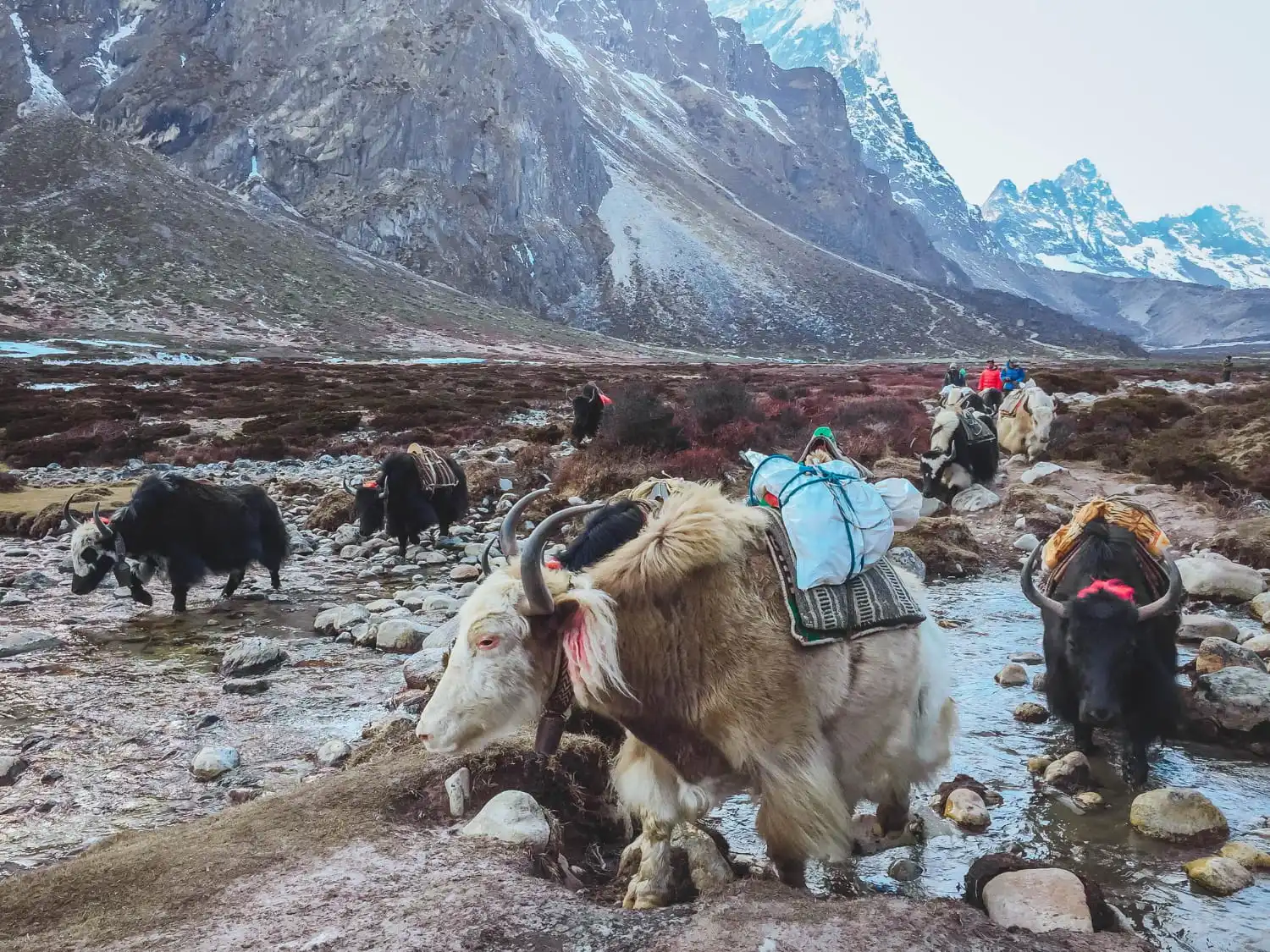
A licensed guide supports navigation, communication, logistics, accommodation and safety decisions. A porter carries the main duffel while you trek with a daypack.
The following are approximate 2026 planning ranges compiled from Navigate Globe’s current operating costs and supplier checks. Confirm the final staff costs in your quotation.
Service | Approximate daily range | 12-day estimated total |
Licensed guide | USD 30–45 | USD 360–540 |
Senior guide | USD 45–60 | USD 540–720 |
Porter | USD 20–30 | USD 240–360 |
Estimate basis: Navigate Globe package records and current supplier quotations reviewed in July 2026.
Teahouse Accommodation Costs
Basic teahouse rooms can appear inexpensive when booked separately, but prices increase with altitude and demand.
Trail area | Typical room range |
Lukla to Namche | USD 5–20 |
Tengboche to Dingboche | USD 7–20 |
Lobuche and Gorak Shep | USD 10–25+ |
Rooms may cost more during busy periods or when travellers request private bathrooms and upgraded facilities.
Food and Drink Costs
Food becomes more expensive as you move higher because porters, aircraft and animals transport supplies into the region.
Expense | Typical range |
Basic breakfast | USD 5–10 |
Lunch | USD 7–14 |
Dinner | USD 8–16 |
Daily meal total | USD 25–45 |
Tea or coffee | USD 1–4 |
Bottled water | USD 1–5 |
If your package includes three meals per day, you still need money for drinks, snacks and menu upgrades.
Travel Insurance Cost
Travel insurance can cost roughly USD 80–250 depending on:
Your country
Your age
Trip duration
Medical coverage
Altitude limit
Helicopter evacuation coverage
Cancellation protection
Choose a policy that explicitly covers trekking at the highest altitude on your itinerary and emergency helicopter evacuation.
Review our Everest Base Camp travel insurance guide for the coverage limits and exclusions to check before buying a policy.
Trekking Gear Cost
Your gear budget depends on what you already own.
Gear approach | Estimated budget | Best for |
Bring existing gear | USD 0–100 | Experienced trekkers |
Rent key items in Kathmandu | USD 50–150 | One-time trekkers |
Buy a full setup | USD 400–1,000+ | Frequent trekkers |
Do not rent trekking boots unless you have enough time to test and break them in.
Use our Everest Base Camp packing list to identify which items you already own and which equipment may be cheaper to rent in Kathmandu.
Tips for Guides and Porters
Tipping is customary but not a fixed government charge.
For budgeting, Navigate Globe recommends allowing approximately USD 10–15 per guide per day, subject to group size and service quality. Ranges could be:
Guide: USD 10–15 per day
Porter: USD 5–10 per day
Higher amount for private or exceptional service
Ask the operator whether the suggested amount is calculated per traveller, per group or per staff member.
Wi-Fi, Charging, Showers and Other Trail Expenses
Small daily charges can become a meaningful part of the EBC trek cost.
Trail expense | Approximate range |
Wi-Fi | USD 3–10 |
Device charging | USD 2–6 |
Hot shower | USD 3–8 |
Bottled water | USD 1–5 |
Snacks | USD 2–10 |
Laundry | USD 3–8 where available |
Prices generally rise with altitude.
What Is the Estimated Total EBC Trip Budget?
While package prices provide a useful starting point, your total Everest Base Camp trek budget should also include expenses paid before, during and after the trek. The estimates below exclude international flights.
Cost category | Cost type | Estimated amount | Estimate status |
Navigate Globe package | Confirmed | From USD 1,800 | Confirmed starting price |
Nepal visa | Government fee | USD 30–50 | Official fee |
Travel insurance | Estimated | USD 80–250 | Varies by policy and traveller |
Trekking gear | Estimated | USD 50–500+ | Varies by existing gear and rental needs |
Tips | Estimated | USD 150–350 | Recommended allowance |
Personal trail spending | Estimated | USD 150–400 | Varies by traveller |
Emergency and delay buffer | Recommended | USD 150–400 | Recommended allowance |
Estimated in-Nepal total | Approximately USD 2,100–3,400+ | Planning estimate |
Confirm the current tourist visa fee through Nepal’s official immigration authority before departure.
Travellers who already own suitable equipment and keep personal spending low may stay near the lower end of the estimate. Upgraded accommodation, additional services, higher insurance premiums or flight delays may increase the final budget.
Sample Everest Base Camp Budget Scenarios
Every trekker spends differently. The following examples show how travel style, personal spending and service choices can influence the total Everest Base Camp trek budget.
Traveller profile | Estimated in-Nepal budget | Main assumptions |
Budget-conscious standard trekker | USD 1,850–2,250 | Rented gear, limited optional expenses and standard services |
Typical first-time trekker | USD 2,100–2,700 | Insurance, tips, gear and moderate personal spending |
Couple travelling together | USD 2,100–2,700 each | Shared porter where available, with moderate personal spending. |
Comfort-focused private trekker | USD 3,000–5,000+ | Private support, upgraded lodges and additional services |
These are sample scenarios, not package quotations.
How Much Extra Spending Money Should You Carry?
Your trail budget should include personal spending and a separate allowance for unexpected delays.
If meals and accommodation are included, many trekkers carry around USD 200–400 in Nepali rupees for trail extras. Carry a separate emergency buffer for delays or itinerary changes.
Typical Daily Personal Spending
A realistic daily personal budget can cover:
Wi-Fi
Charging
Hot showers
Snacks
Drinks
Bottled water
Small purchases
Budget roughly USD 15–30 per day if your main meals and accommodation are already included.
Emergency and Flight-Delay Buffer
Keep an additional USD 150–400 for:
Extra Kathmandu accommodation
Additional meals
Ramechhap transport changes
Delayed Lukla flights
Changed domestic travel
Minor replacement gear
Do not treat this money as your normal spending allowance.
Cash and ATM Planning
Carry Nepali rupees for the trail.
ATMs may be available in Lukla and Namche Bazaar, but they can fail or run out of cash. Card payments remain limited, especially higher on the route.
Withdraw or exchange enough money before leaving Kathmandu.
Can You Trek to Everest Base Camp on a Lower Budget?
A lower-cost EBC trek is possible, but essential safety and support should not be removed simply to reduce the quotation.
What a Safe Budget EBC Package Should Include
A safe budget package should still include:
Required permits
Qualified guide support
A realistic itinerary
Acclimatisation days
Reliable accommodation
Clear meal arrangements
Staff wages and insurance
Emergency contact support
A cheaper itinerary should not remove the rest days needed for safe altitude adaptation. Read our Everest Base Camp difficulty and acclimatisation guide before comparing shorter packages.
Warning Signs of an Unrealistically Cheap EBC Quote
Check carefully when a quote excludes or hides:
Lukla flights
Meals
Permits
Guide costs
Porter arrangements
Staff insurance
Ground transfers
Processing fees
Delay policies
A USD 900 quote can become more expensive than a USD 1,800 package once you add the missing services.
How Can You Reduce the EBC Trek Cost Safely?
You can lower your total budget by changing optional comforts rather than essential safety services.
Join a Group Departure
Share a Porter
Rent Gear in Kathmandu
Choose Standard Teahouses
Use Water Purification
Limit Optional Trail Services
Book Early for Peak Dates
Is the Lowest EBC Trek Price the Best Value?
The lowest quoted price is not always the best value. Compare what each package includes before comparing final prices.
Compare before booking | Why it affects value |
Lukla flights | One of the largest expenses |
Meals | Significant daily cost |
Permits | Required route expense |
Guide and porter | Safety and physical support |
Accommodation | Affects comfort and reliability |
Delay assistance | Reduces surprise expenses |
Staff insurance | Reflects responsible operation |
Processing charges | Can increase the final price |
The best-value package gives you the right support, clear inclusions and a safe itinerary at a fair price. It does not simply show the lowest number.
Budget vs Standard vs Premium EBC Trek
The right Everest Base Camp trek package depends on the level of support, comfort and flexibility you want rather than price alone.
Trek type | Best for | Typical inclusions | Main trade-off |
Budget | Cost-conscious trekkers | Essential guide support and basic services | More expenses may be paid separately |
Standard | Most first-time trekkers | Balanced support, organised logistics and standard accommodation | Moderate package price |
Premium | Comfort-focused travellers | Private support, upgraded lodges and additional services | Higher overall cost |
For most first-time trekkers, a transparent standard package offers the best balance between price, safety, convenience and overall trekking experience.
Frequently Asked Questions About EBC Trek Cost
How much extra cash should I carry on the EBC trek?
When meals and accommodation are included, many trekkers carry roughly USD 200–400 in Nepali rupees for showers, charging, Wi-Fi, snacks and small purchases. Keep a separate emergency allowance for extra accommodation or transport delays.
Should I carry cash for the Everest Base Camp trek?
Yes, carry Nepali rupees because small teahouses and trail services may not accept cards. Arrange most of your cash in Kathmandu rather than relying on machines along the route.
Are ATMs available during the Everest Base Camp trek?
ATMs may be available in Lukla and Namche Bazaar, but machines can be offline, empty or reject foreign cards. Do not depend on an ATM after leaving Kathmandu.
Are credit cards accepted on the EBC trail?
Card acceptance is limited and can involve additional fees. Use cards for major payments in Kathmandu and carry Nepali rupees for trail expenses.
Are Lukla flights included in the trek price?
Yes. Navigate Globe's standard 14-day Everest Base Camp Trek includes return domestic flights between Kathmandu (or Ramechhap during peak flight operations) and Lukla as part of the package. Always check your final itinerary for the latest flight arrangements, as departure airports may vary by season.
Are permits included in the EBC package?
Yes, Navigate Globe's standard package includes the Sagarmatha National Park Permit and the Khumbu Pasang Lhamu Rural Municipality Permit (Khumbu Trek Card). These required trekking permits are arranged before or during the trek according to the itinerary.
Review Navigate Globe’s 14-Day Everest Base Camp Trek, starting from USD 1,800, to compare current inclusions and request a personalised total-budget estimate.
Expert reviewed on Mar 5, 2026
Navigate Globe Nepal Planning Desk, Kathmandu-based Nepal travel specialists.
About Navigate Globe Team
Field-tested Nepal travel planning advice from the Navigate Globe team in Kathmandu.